Inventory
How Small Businesses Can Reduce Inventory Mistakes
Reduce inventory errors through clean item data, controlled movement, frequent counts, branch discipline and useful exception review.
By ZenshoTech Team · Published · Updated
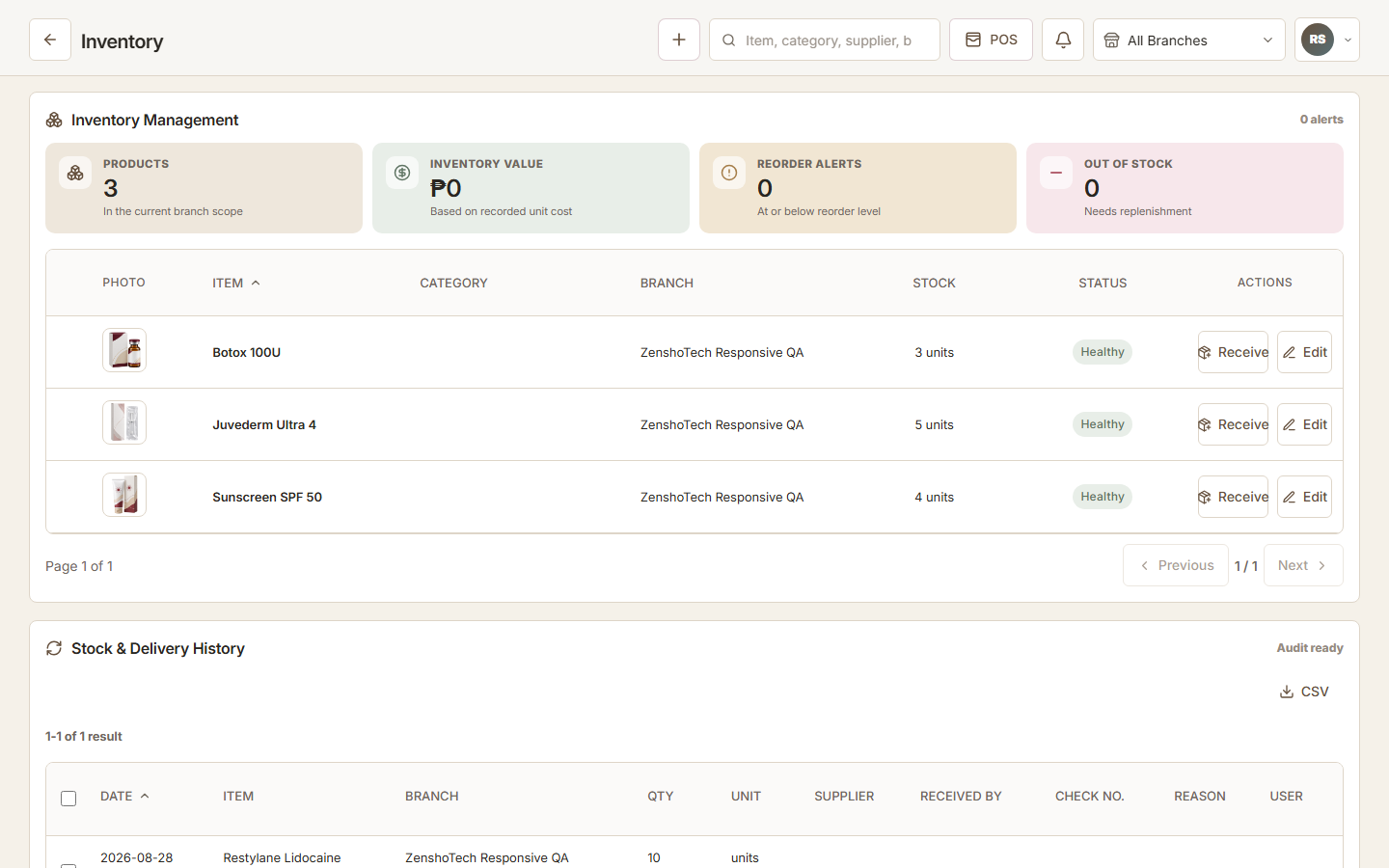
Inventory mistakes rarely come from one bad count. They emerge from inconsistent names, late receiving, unrecorded use, broad adjustment access, branch confusion, and corrections that overwrite history. Software helps when the process around it is clear.
Clean the item master
Give each item a consistent name or code, category, unit, variant, and location context. Archive duplicates and obsolete records instead of creating a new item whenever staff cannot find one.
Be precise about units. A box received and individual pieces sold can create large differences if conversion is unclear.
- Unique identifier
- Standard name
- Unit
- Variant
- Branch
- Reorder threshold
- Active status
Record movements, not just totals
Do not overwrite a quantity to make it match the shelf. Record receiving, sale, use, damage, transfer, return, or correction with a reason and responsible user.
Movement history lets managers find the process failure rather than repeatedly fixing the symptom.
| Mistake | Control |
|---|---|
| Late receiving | Receive at handoff with responsible user |
| Wrong item sale | Searchable clean catalog and correction flow |
| Unrecorded damage | Reasoned authorized adjustment |
| Branch mix-up | Location required on movement |
| Unit mismatch | Standard units and training |
Count by risk
A full annual count is not enough for high-value, fast-moving, or shrinkage-prone items. Use cycle counts: inspect a manageable group weekly or monthly based on risk.
Investigate variance before adjusting. Repeated differences in the same category point to receiving, usage, sales, or training issues.
Practical checklist
- Select risk-based sample
- Freeze or control movement during count
- Use independent counter where practical
- Compare system
- Investigate variance
- Approve adjustment
- Record prevention action
Review useful exceptions
Watch negative stock, sudden adjustments, products sold without expected movement, long-unmoved inventory, open transfers, and repeated low-stock emergencies. Assign owners and deadlines.
Avoid punishing staff for reporting errors; that drives mistakes underground. Separate honest correction from unauthorized behavior.
ZenshoTech inventory controls
ZenshoTech connects structured items, branch-aware quantities, movements, thresholds, value, POS activity, and reports.
The business still owns catalog quality, physical counts, adjustment approval, and specialized stock requirements.
Frequently asked questions
Can inventory software eliminate human error?
No. It creates structure and traceability, while training, permissions, counts, and review reduce remaining risk.
How often should we count?
Count higher-risk items more often and adjust frequency based on value, movement, shrinkage, and operational impact.
Why is negative stock a problem?
It often signals late receiving, wrong location, unrecorded movement, incorrect setup, or transactions processed out of sequence.