POS
POS System for a Retail Store in the Philippines: A Buyer Checklist
POS system for retail store Philippines: a practical guide to choosing a checkout setup that stays fast while preserving clean product, cashier, and branch.
By ZenshoTech Team · Published · Updated
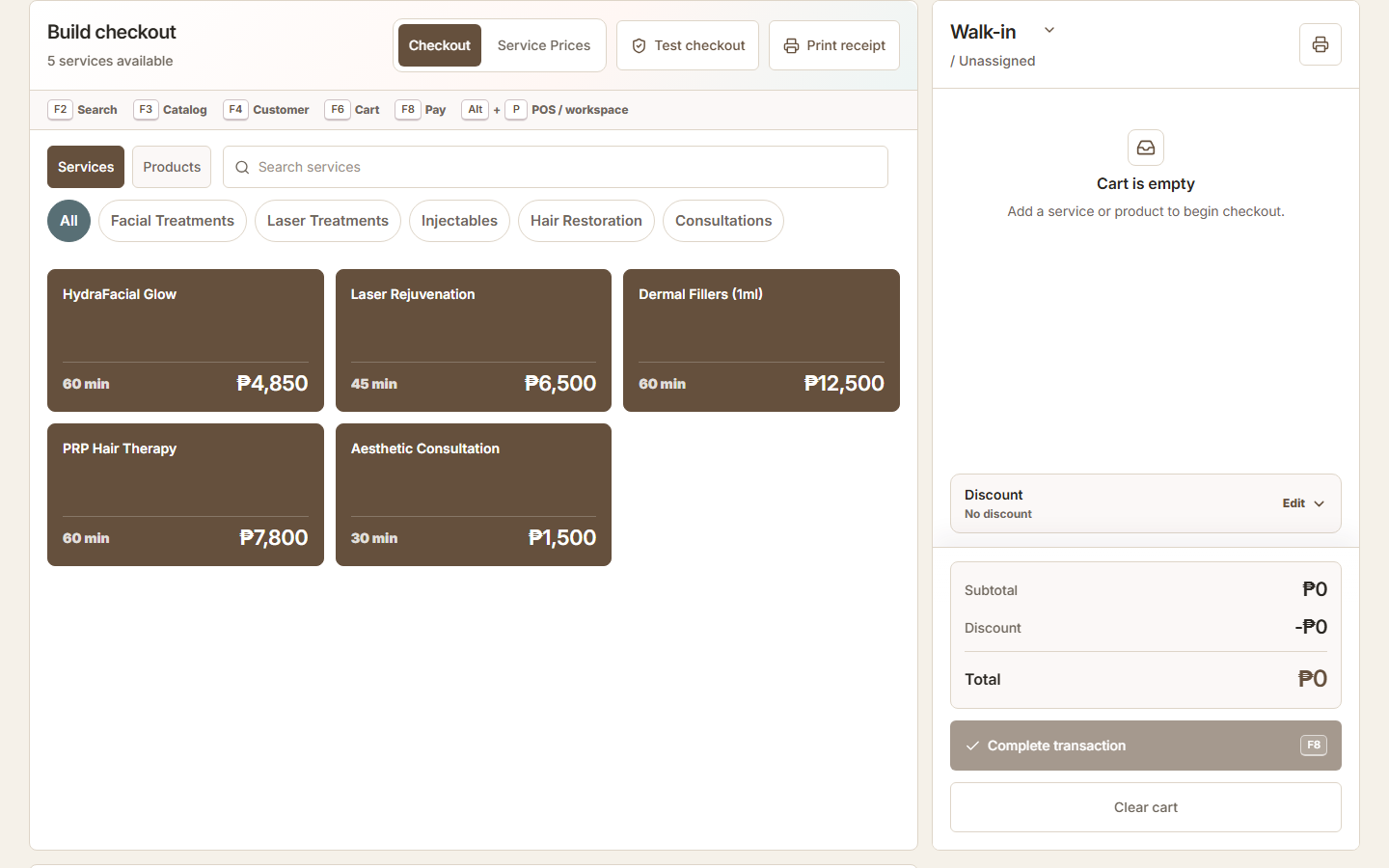
POS system for retail store Philippines is a useful search topic because it points to a real operating decision: choosing a checkout setup that stays fast while preserving clean product, cashier, and branch records. This guide is written for Philippine retail and service businesses and focuses on workflows that can be tested, assigned, and improved rather than unsupported promises or invented benchmarks.
Start with the operating decision
Before comparing screens or prices, describe how the business handles this work today. Identify the people involved, the record that should be authoritative, the handoff that most often fails, and the exception that creates the most rework. That turns POS system for retail store Philippines from a software search into a defined improvement project.
The initial scope should be small enough to test but complete enough to create value. For this topic, the most important design choices are map barcode and non-barcode sales, set permissions for discounts and voids, confirm receipt and end-of-day needs, test slow-internet procedures.
- Map barcode and non-barcode sales.
- Set permissions for discounts and voids.
- Confirm receipt and end-of-day needs.
- Test slow-internet procedures.
Build a controlled workflow
Write the workflow as a sequence with a named owner at each important step. Include what happens when information is missing, a customer or employee changes plans, connectivity fails, or a correction is needed. The normal path matters, but the difficult exception is where weak systems usually create duplicate records or hidden work.
Use individual accounts and the smallest practical permissions. Keep branch, customer, staff, transaction, or inventory context attached where it matters so managers can trace an outcome instead of rebuilding it from chat messages and spreadsheets.
Practical checklist
- Use a clean SKU and variant catalog.
- Run a peak-hour checkout test.
- Reconcile tenders every day.
- Train cashiers on corrections.
Test the information and controls
Use realistic sample data and ask the people who perform the work to complete a full scenario. Confirm required fields, naming conventions, access boundaries, correction history, exports, mobile usability, and the source of each report number. A successful demonstration is evidence of fit for the tested workflow, not proof that every business or regulatory requirement is covered.
For Philippine tax, labor, privacy, medical, accounting, accreditation, or other regulated obligations, confirm the exact requirements with qualified advisers and relevant authorities. General business software should not be assumed to replace specialist systems or professional advice.
| Test area | Question to answer |
|---|---|
| People | Who owns the next action and who approves exceptions? |
| Data | Which record is authoritative and how are duplicates corrected? |
| Access | Can each role see only the applications and branches it needs? |
| Failure | What happens during an outage, correction, cancellation, or transfer? |
| Reporting | Can a total be traced to the underlying activity? |
Avoid predictable implementation mistakes
The fastest way to weaken adoption is to automate an unclear process. Clean the source records, agree on the vocabulary, and decide who handles exceptions before importing live data. Train with examples from the business rather than a feature tour.
Pay particular attention to these risks: importing duplicate products; giving every cashier manager access; ignoring returns and exchanges. Review early activity frequently enough to correct the process before a workaround becomes the unofficial system.
- Importing duplicate products.
- Giving every cashier manager access.
- Ignoring returns and exchanges.
Measure whether the change is working
Choose a baseline before launch and review a small set of measures after people have had time to use the workflow. Useful signals for this topic include checkout time, correction rate, unreconciled transactions. Interpret them with volume, branch, staffing, season, and data-quality context.
ZenshoTech connects POS, customers, products, services, branches, inventory, and reports. Use a trial or demonstration to test the exact scenario described in this guide, including one common case and one difficult correction. Keep any specialist compliance or professional workflow in the system designed and reviewed for that purpose.
- Track checkout time.
- Track correction rate.
- Track unreconciled transactions.
Frequently asked questions
What should we test first when evaluating POS system for retail store Philippines?
Test one common end-to-end workflow and one difficult exception using realistic users, permissions, branches, and records. Confirm who owns each follow-up.
How can a small business avoid a disruptive rollout?
Start with a controlled scope, clean the source data, train the people doing the work, document fallback steps, and review checkout time after launch.
Does business software guarantee better results?
No. Software can make records and handoffs clearer, but outcomes still depend on process design, data quality, staff adoption, management, demand, and appropriate professional guidance.