Aesthetic Clinic
Aesthetic Clinic Management Software: What Features Should You Look For?
A careful buyer guide for aesthetic clinic leads, appointments, client operations, POS, inventory, staff, marketing and reports—without unsupported EHR claims.
By ZenshoTech Team · Published · Updated
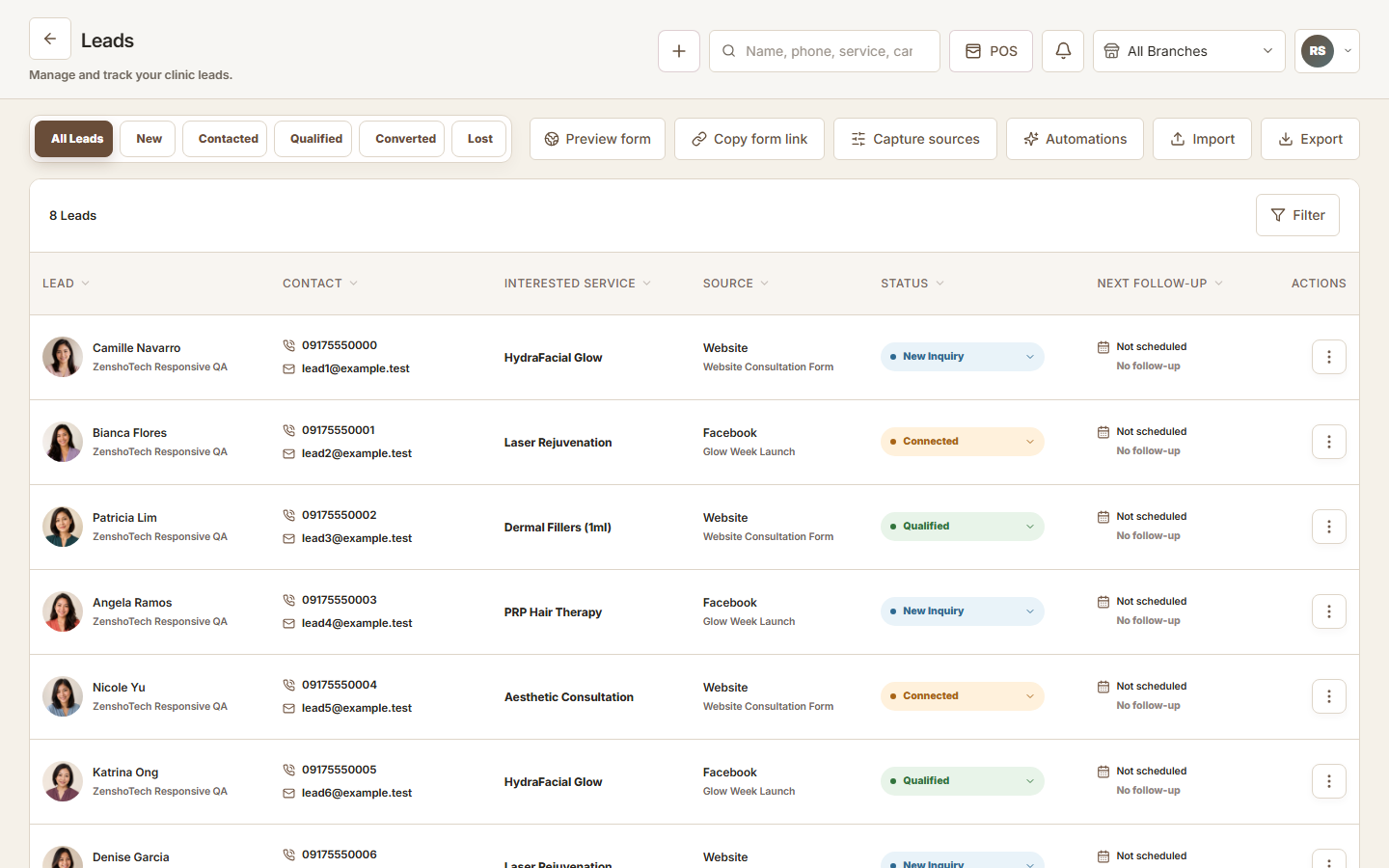
Aesthetic clinic software should support the commercial and operational journey without pretending that every business tool is an electronic health record. Start by separating lead, scheduling, client service, sales, stock, marketing, and reporting needs from specialist clinical and regulatory responsibilities.
Map inquiry to consultation
High-intent inquiries often arrive from social media, campaigns, websites, calls, and referrals. The system should preserve source, interest, owner, stage, activity, and next action so follow-up is visible.
When a consultation is booked, the lead and customer context should not disappear. Test the conversion and duplicate-prevention process.
- Source and campaign context
- Treatment or service interest
- Assigned owner
- Next follow-up
- Consultation booking
- Conversion history
Evaluate appointment operations
Test service duration, practitioner or staff availability, rooms, branches, reschedules, cancellations, and status changes. Confirm what belongs in an operational client profile and who can access it.
Do not assume notes in general business software meet medical-record, privacy, retention, security, consent, or clinical documentation obligations.
| Operational need | Separate review may be required |
|---|---|
| Consultation booking | Clinical suitability workflow |
| Client contact profile | Medical record content and retention |
| Service catalog | Clinical protocol or prescribing |
| Business consent field | Legally sufficient informed consent |
| Product inventory | Regulated lot/serial/expiry controls |
Connect checkout and inventory
A clinic may sell services, packages, and after-care products. Test how checkout associates customer, service, product, branch, discount, and staff context, and how product sales affect inventory.
If the business relies on lot, batch, serial, expiry, cold-chain, or controlled-item requirements, verify those exact capabilities separately rather than inferring them from a general inventory screen.
Permissions, marketing, and reporting
Front desk, practitioners, marketers, inventory staff, managers, and owners do not require identical access. Test role and branch permissions with realistic users.
Marketing tools should use appropriate customer choices and only the data needed. Reports should trace totals to underlying operational activity without exposing more information than the viewer's role requires.
Practical checklist
- Test a least-privilege front-desk account
- Test inquiry ownership
- Test room and provider conflict
- Test service-plus-product checkout
- Review inventory exceptions
- Review consent-aware audience flow
- Document specialist systems that remain
Where ZenshoTech fits
ZenshoTech connects leads, appointments, client profiles, services, packages, POS, inventory, staff, branches, marketing, expenses, and operational reports for aesthetic businesses.
It is not represented here as an EHR. Clinics should obtain qualified legal, privacy, security, clinical, accounting, and regulatory review for their particular operation.
Frequently asked questions
Is aesthetic clinic software automatically an EHR?
No. Business operations software and electronic health record systems have different capabilities and obligations.
What should be tested first?
A real journey from campaign inquiry to consultation, appointment, checkout, product movement, and appropriate follow-up.
Can clinics use ordinary marketing consent?
They should obtain qualified advice and implement clear, purpose-specific, documented practices appropriate to the data and channel.